
How to Handle Smoking Habits on Flights
Smoking and vaping are banned on every commercial flight, worldwide, without exception. For smokers, this means several hours of enforced smoke-free time, in a confined, often stressful environment, with familiar triggers firing throughout and nothing to answer them with. For many smokers, a long-haul flight is one of the most challenging situations they ever face.
Understanding why flights are hard for smokers, and having a real plan for handling it, makes all the difference between a stressful journey and one that actually builds the habit replacement muscle that helps long term.
Why Flights Are Especially Hard for Smokers
The difficulty of a flight for a smoker is not only about nicotine withdrawal. It is about the complete removal of the familiar behavioral routine in an environment that is both stressful and confined. Several things compound at once:
- Stress of travel, the airports, the queues, the crowds, the uncertainty all fire the automatic stress-to-cigarette response
- Boredom at altitude, hours of sitting with nothing to do activates the restlessness trigger that smoking used to solve
- No escape, unlike being at home or work, there is no option to step outside for a moment
- Post-meal trigger, meals on flights are followed by one of the strongest smoking triggers many smokers experience
- Anticipation, on descent, knowing that landing means being able to smoke creates a powerful anticipatory craving
“A smoker on a long flight is not just fighting the absence of nicotine. They are fighting the absence of a behavioral routine that structured their day for years, with no way out of the situation and every stress trigger firing at once.”
The Triggers That Fire During Flights
Airport Stress
Security queues, delays, and crowds create exactly the stressful conditions that cigarettes were used to manage, and the habit fires automatically before boarding even begins.
Cruising Boredom
Hours at altitude with limited movement and repetitive sensory input activates the boredom trigger, one of the most common reasons smokers reach for a cigarette.
After Meals
The post-meal smoking trigger is deeply wired for most smokers. On a flight there is nowhere to go, the trigger fires and there is nothing familiar to answer it with.
On Descent
The anticipation of landing, and being able to smoke, often creates an intense craving spike in the final hour of a long flight.
Practical Tips for Managing Smoking Habits on Flights
Why Cigtrus Works on Every Flight
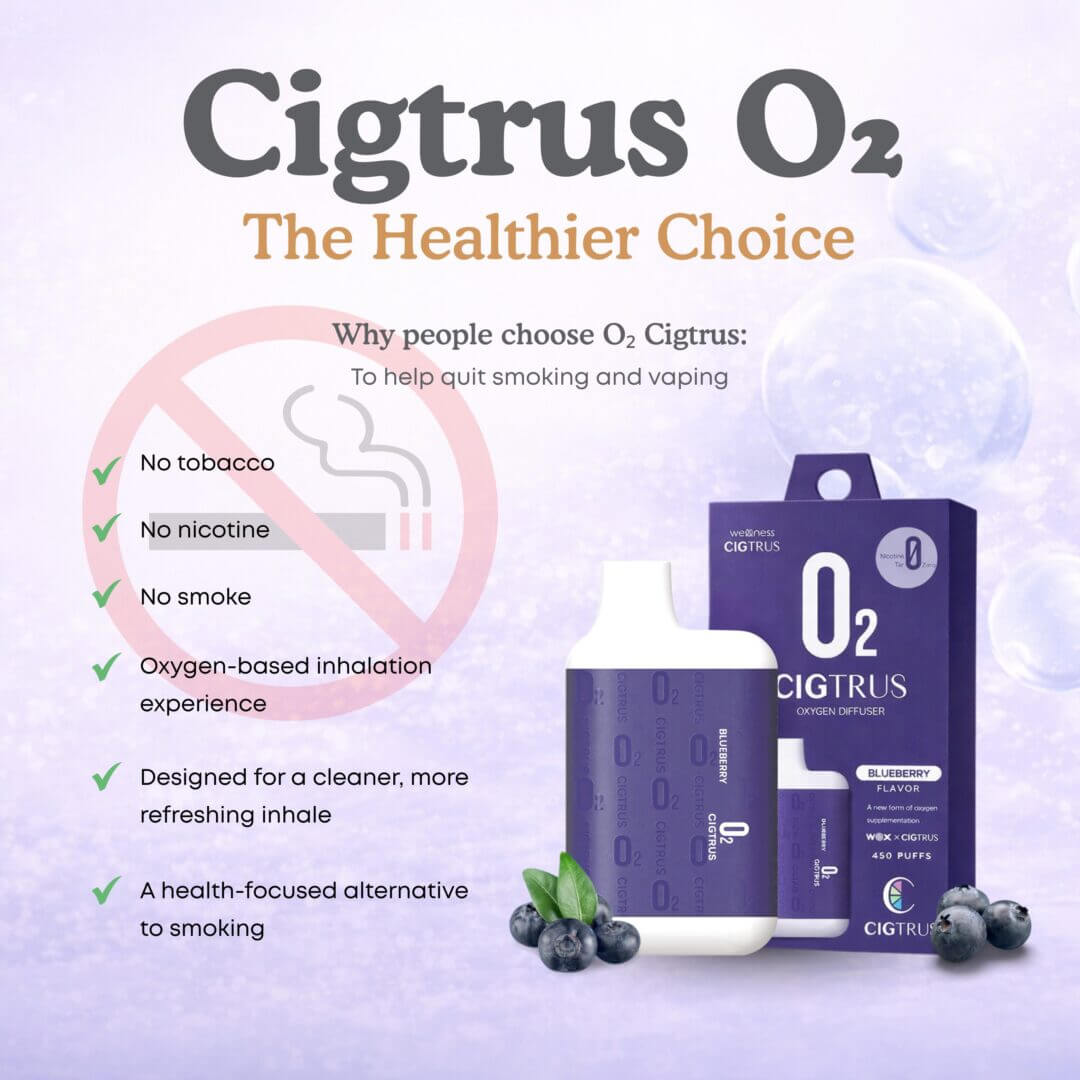
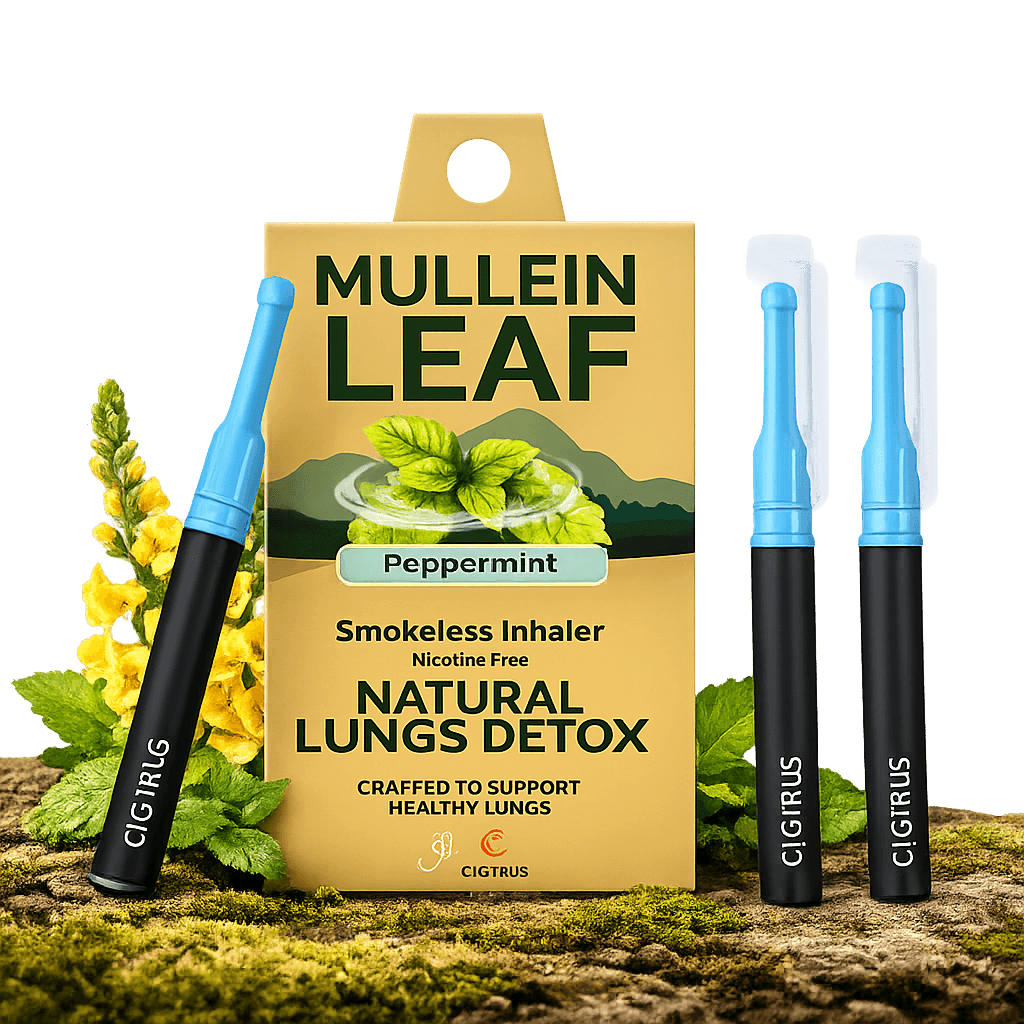
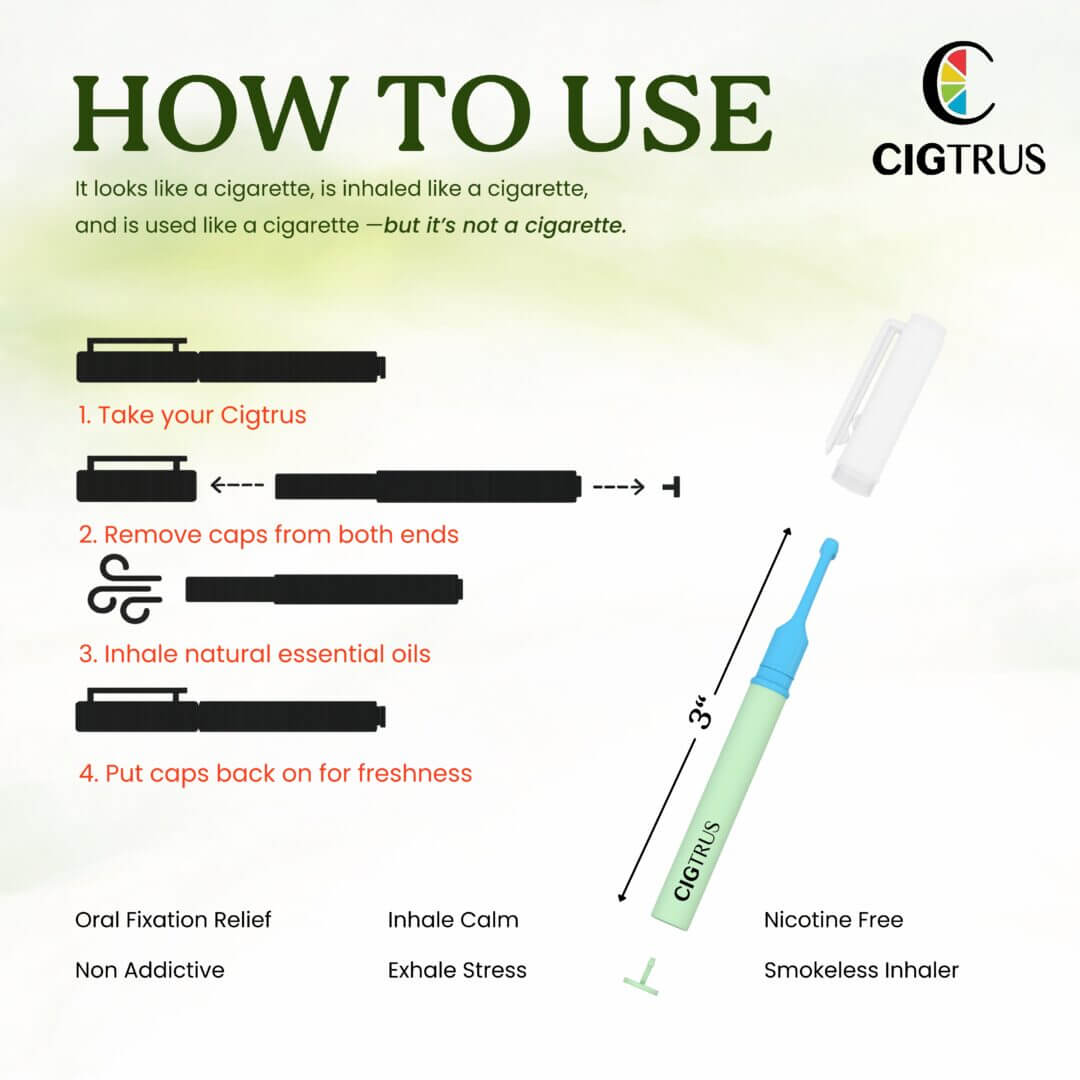
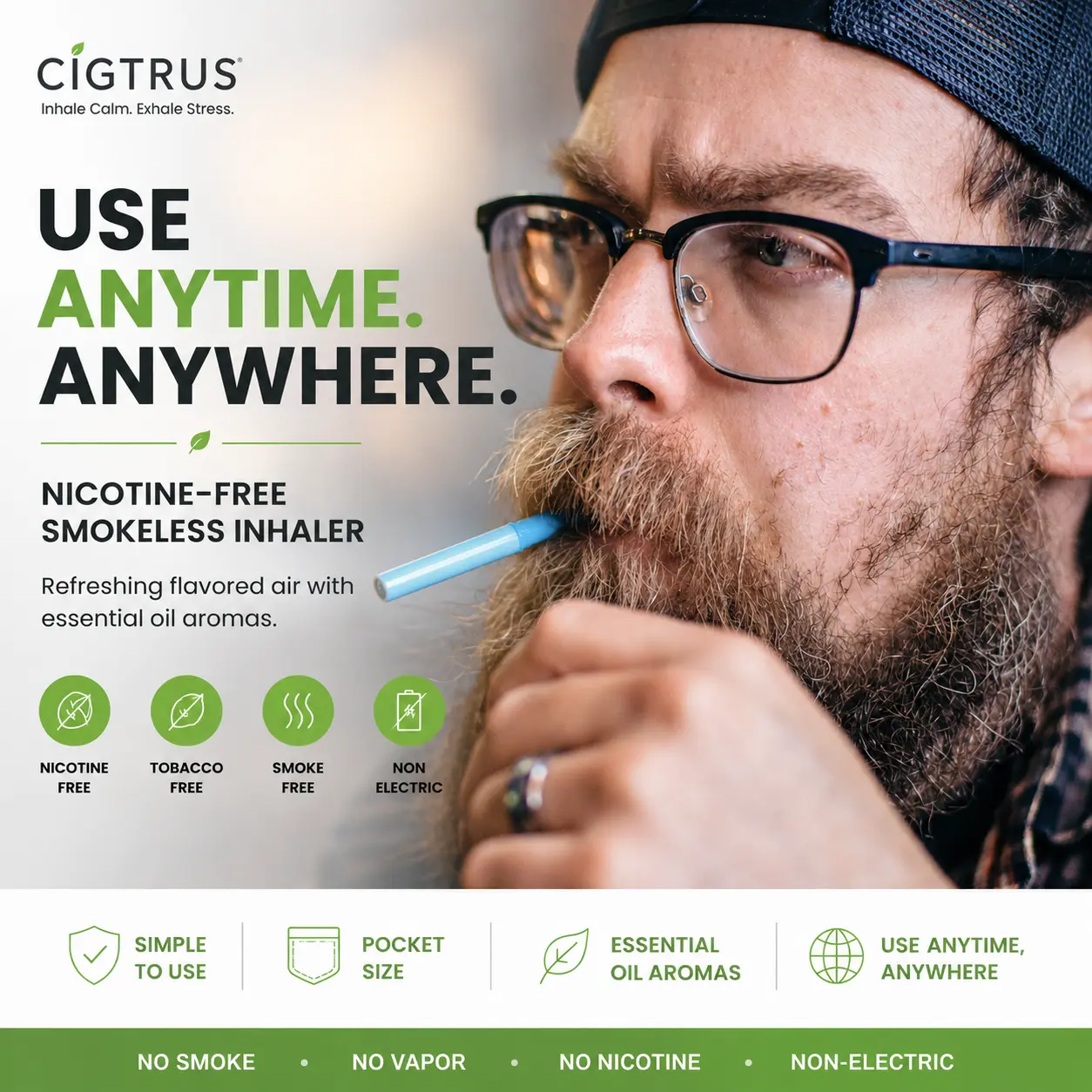
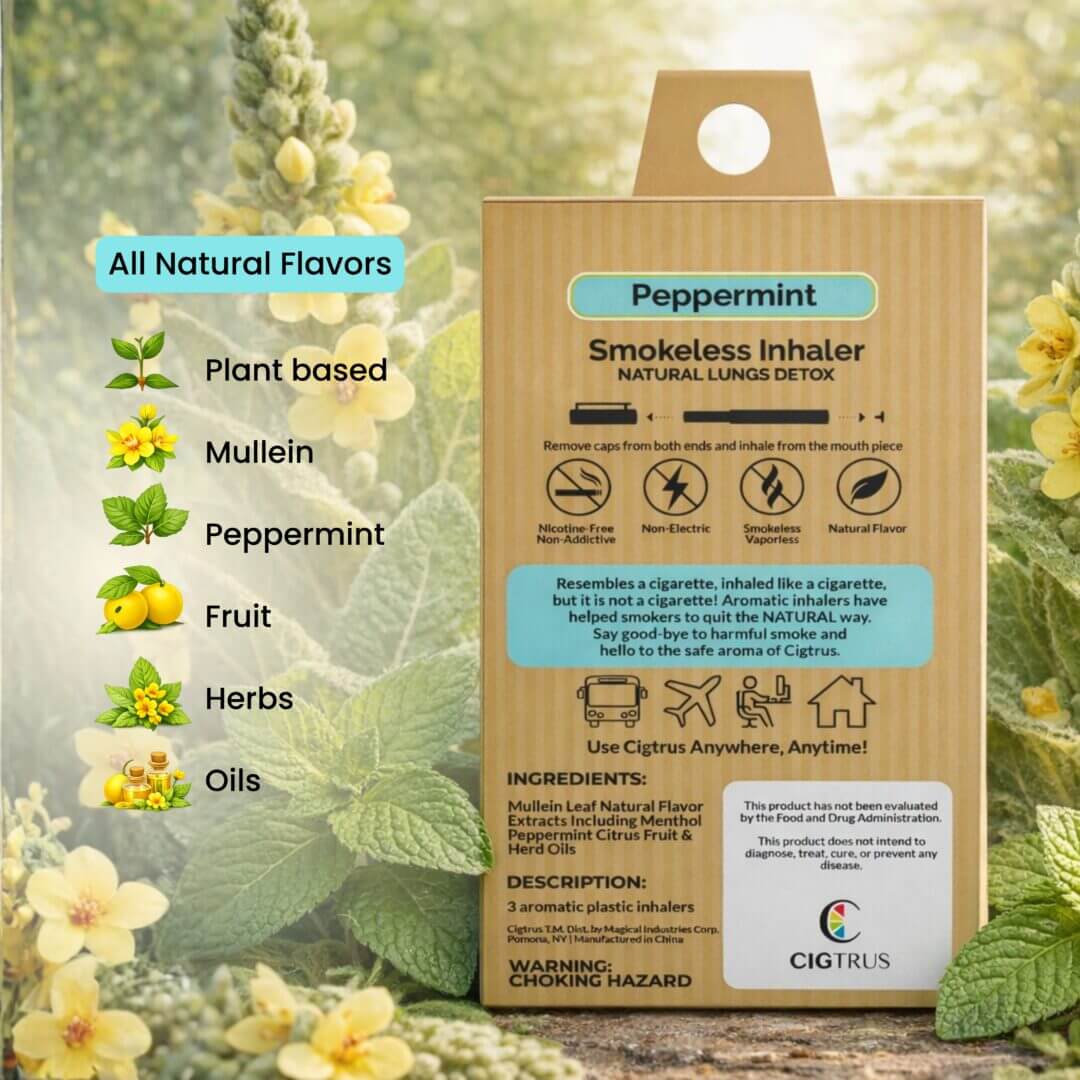
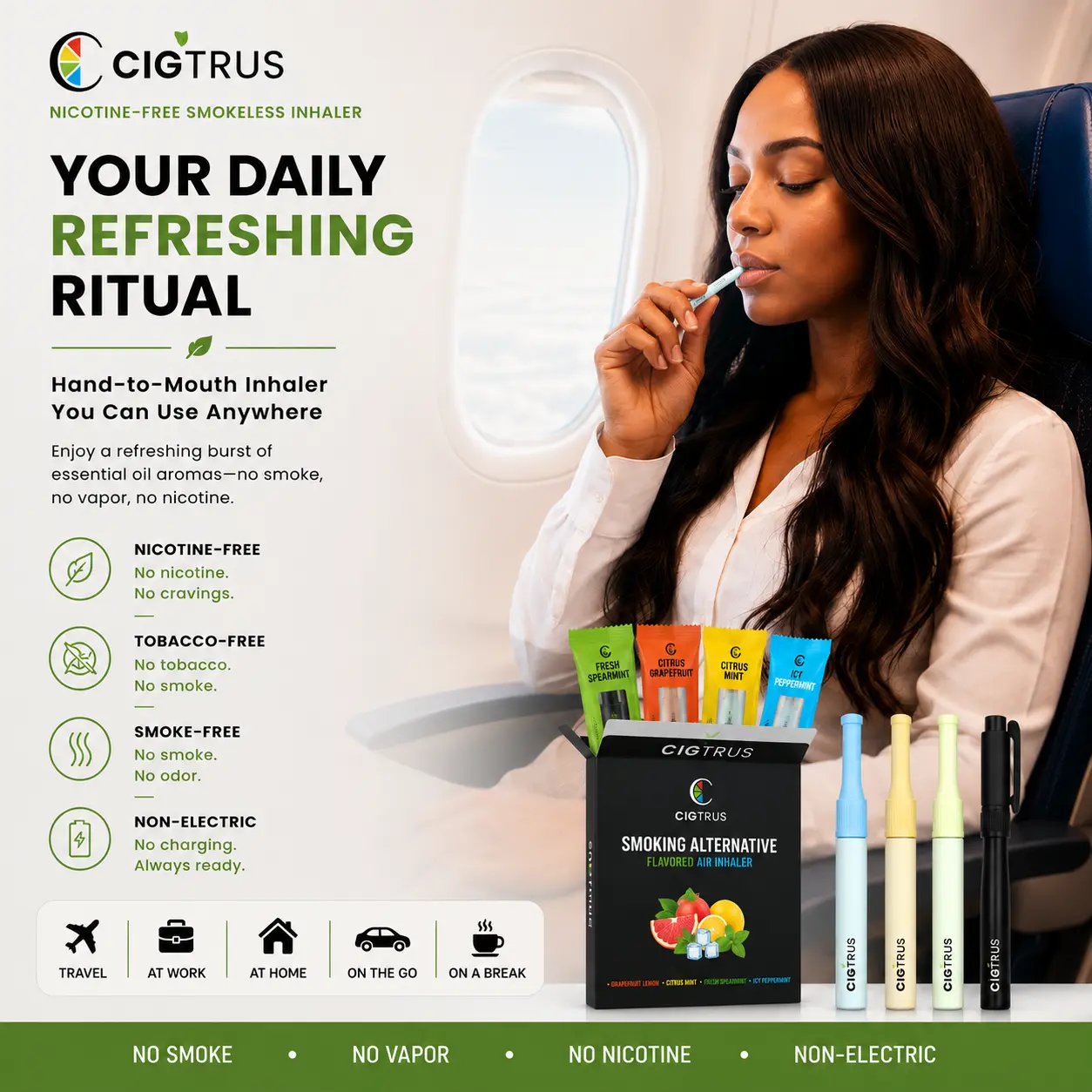
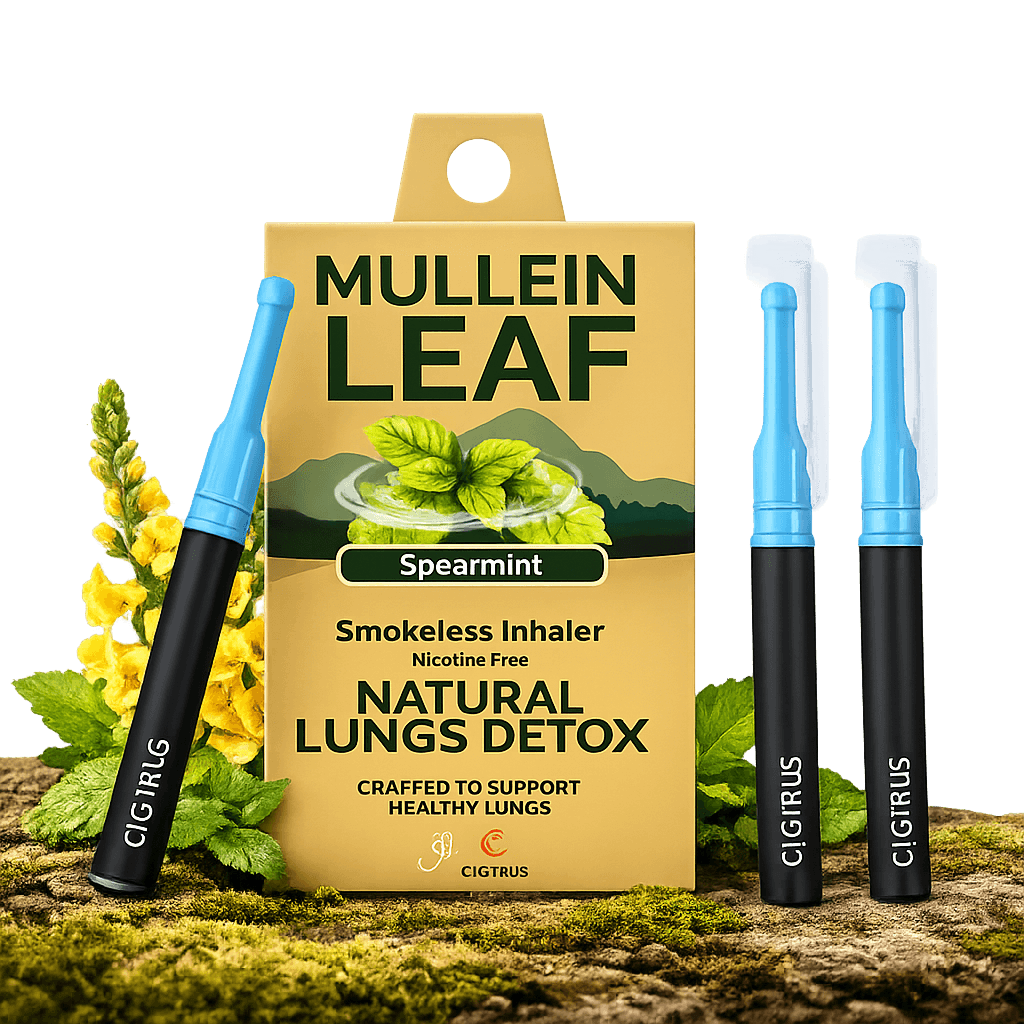
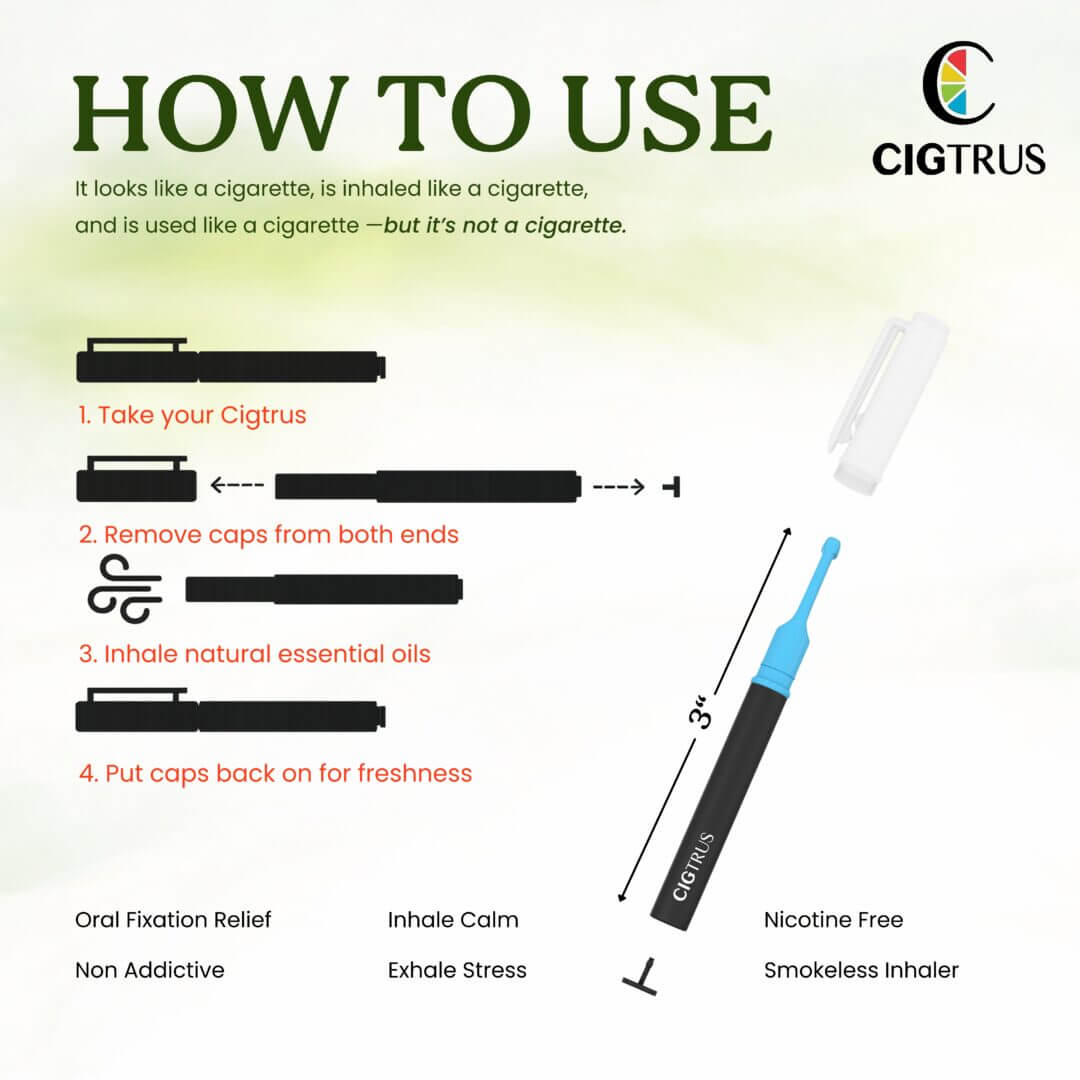
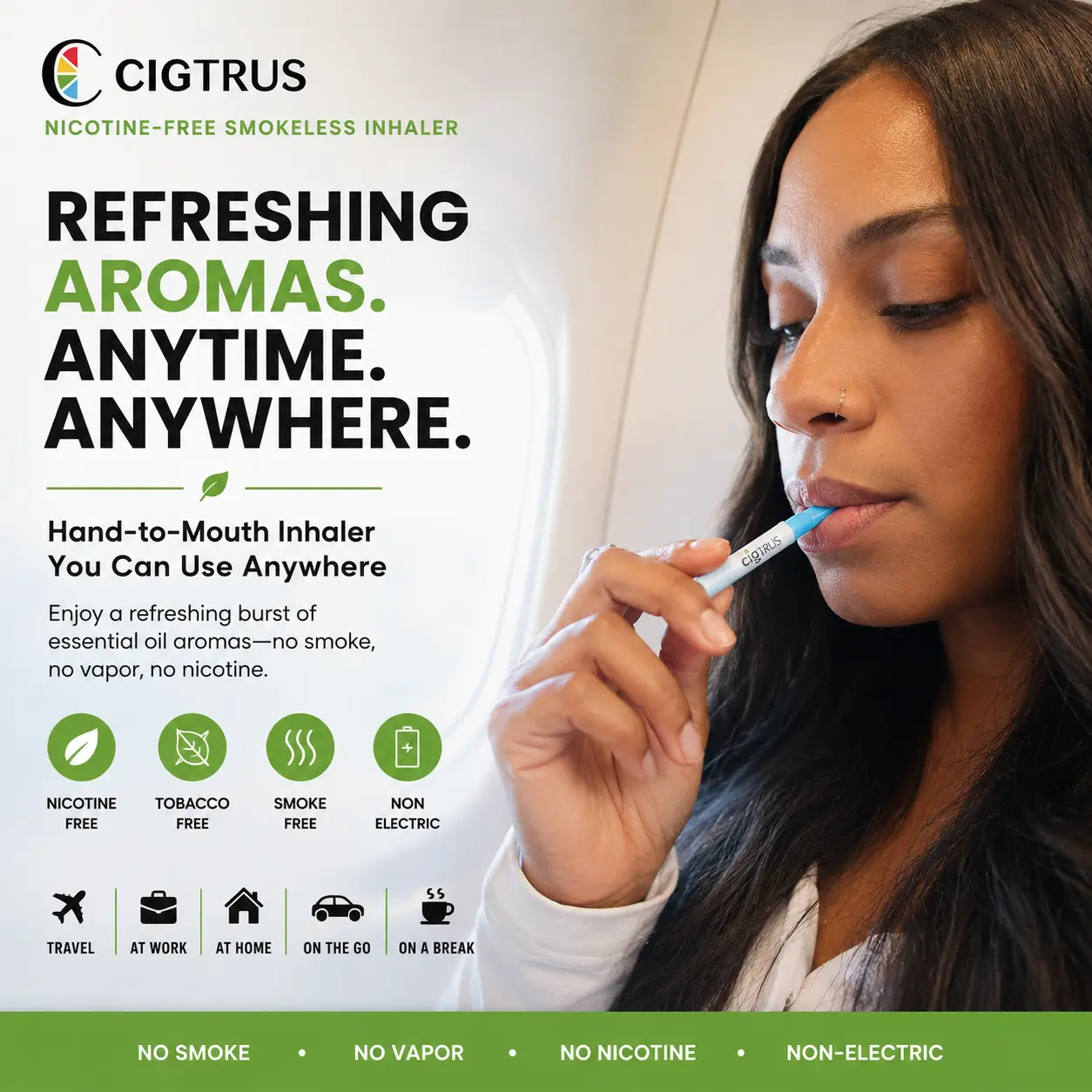
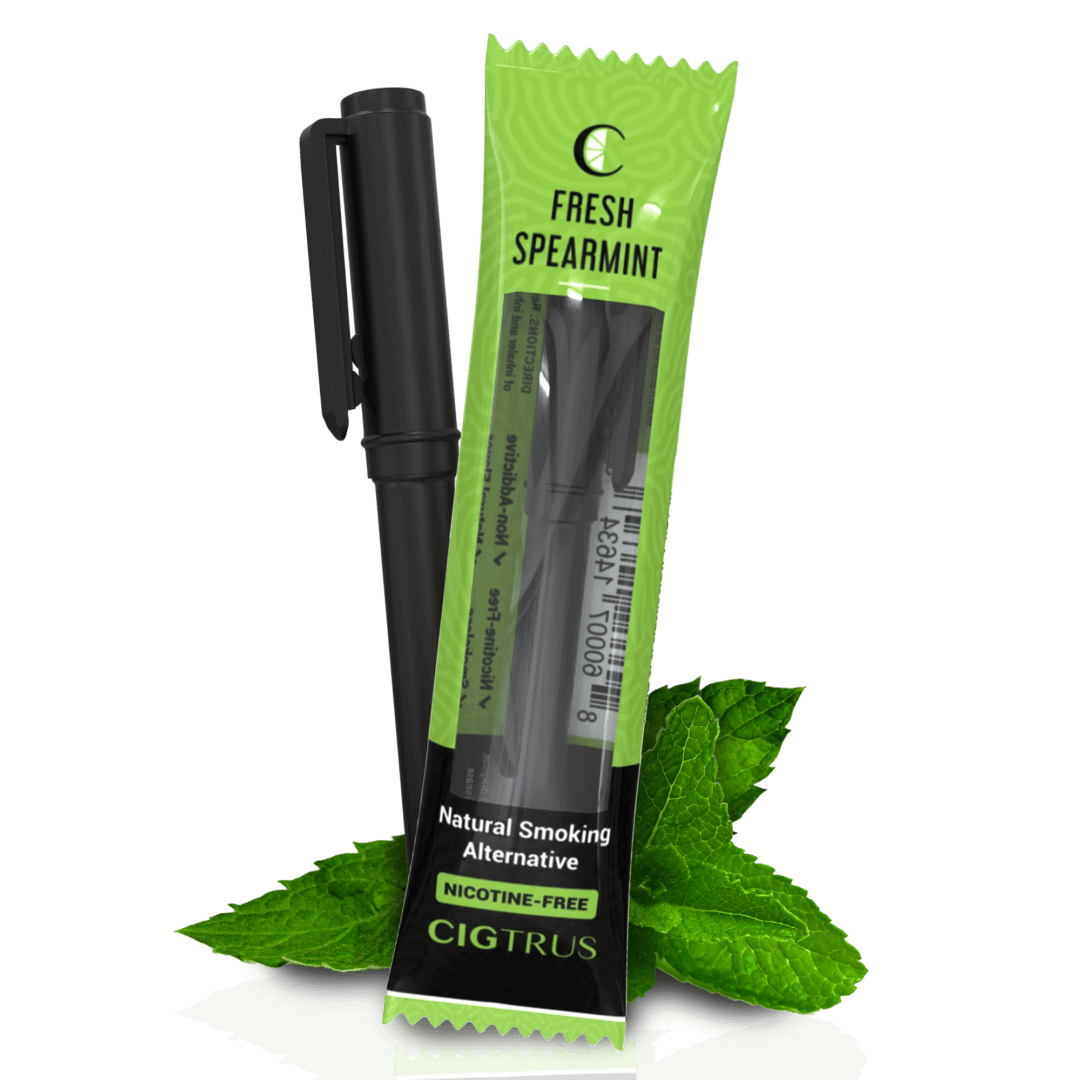
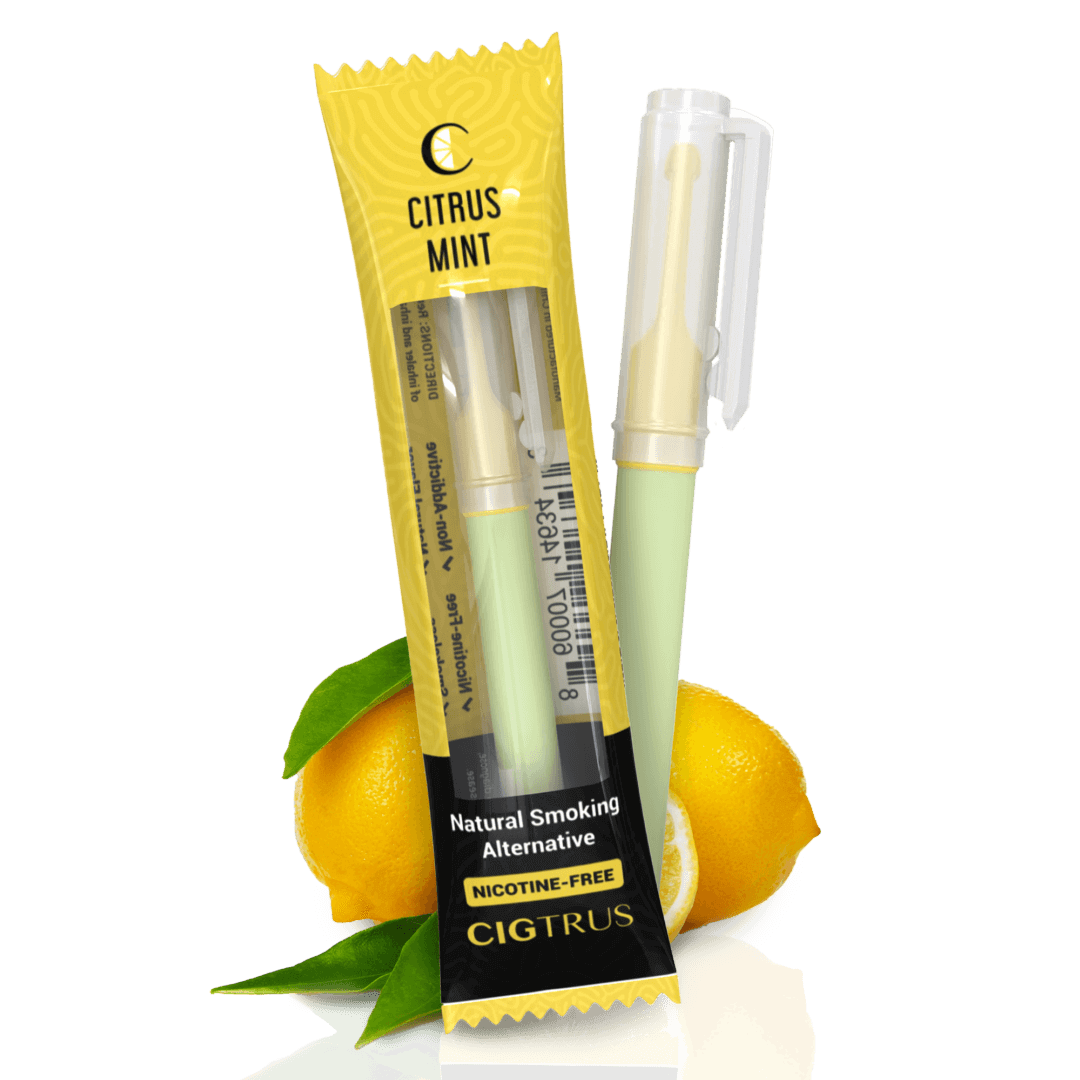
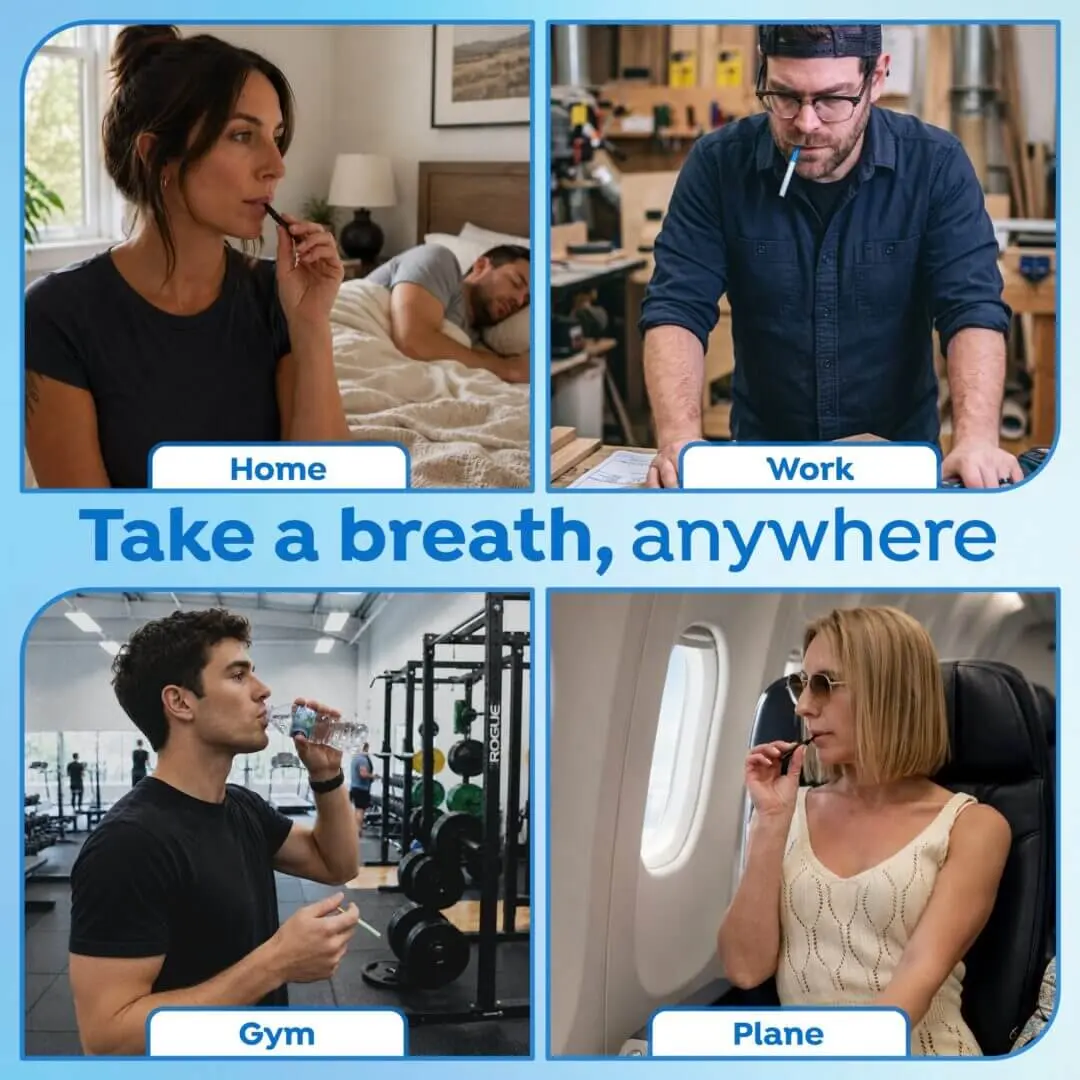
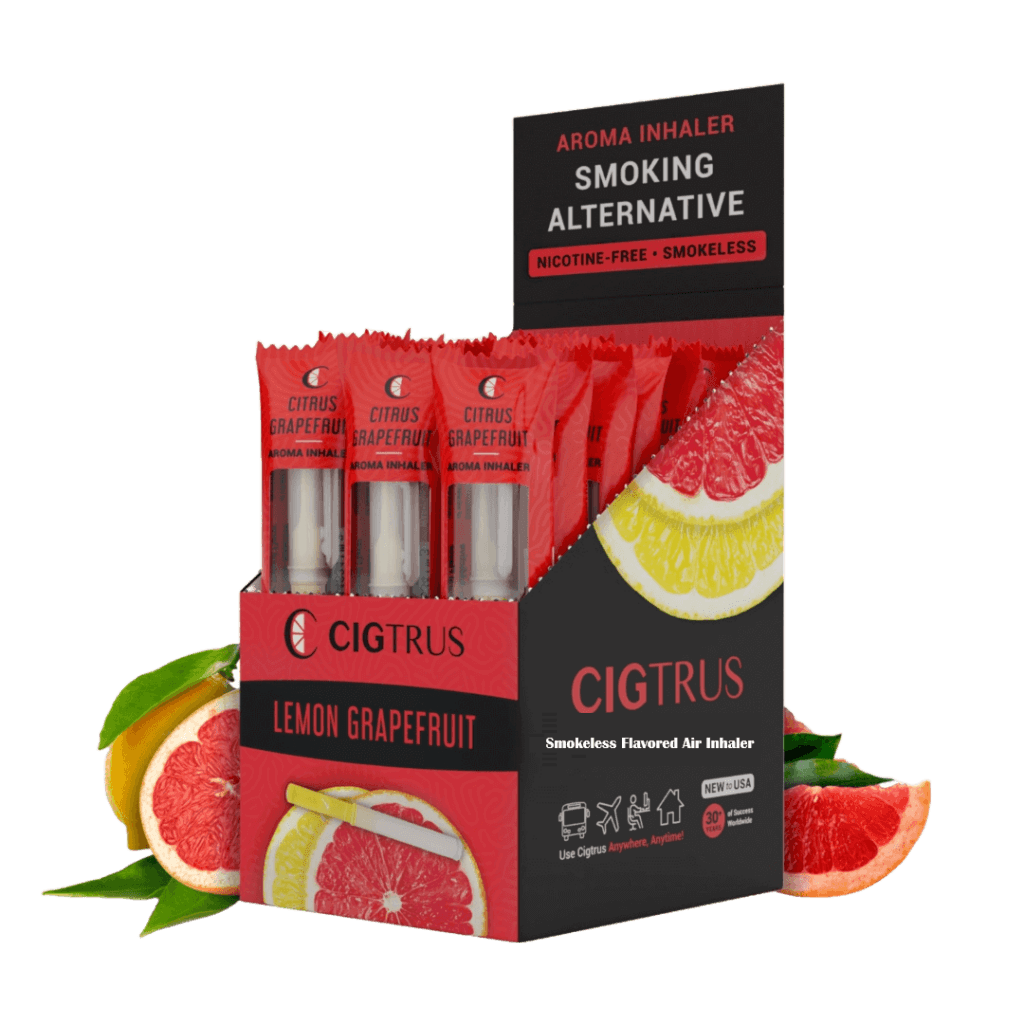
Cigtrus is a nicotine-free, smokeless, non-electric inhaler. It produces no vapor, contains no nicotine, requires no battery, and is not classified as a vaping device. It is not restricted by airline vaping bans and can be used throughout any flight, at your seat, discreetly, without affecting anyone around you.
Why Cigtrus Works at 35,000 Feet
Satisfies the hand-to-mouth habit at every trigger moment throughout the entire flight
Provides the familiar inhalation rhythm, the breath the body still expects at stress and boredom triggers
Natural citrus and mint aroma, a fresh sensory reset that redirects craving attention cleanly
Completely discreet, no visible cloud, no smell, no disruption to neighbouring passengers
No vapor, no battery, not a vaping device, usable throughout any flight without restriction
Turning Every Flight Into Practice
For smokers in the process of quitting, a long-haul flight can be reframed as one of the most powerful practice sessions available. Hours of enforced smoke-free time, every trigger managed, every craving redirected, builds exactly the behavioral foundation that makes the rest of the quit journey more sustainable.
The goal is not just to survive the flight. The goal is to land with the habit a little weaker than when you boarded.
Frequently Asked Questions
Can you smoke or vape on a flight?
No. Smoking and vaping are banned on all commercial flights worldwide without exception. This applies on the aircraft, including in lavatories, which are fitted with smoke detectors.
What can smokers do on a long-haul flight to manage cravings?
Having a behavioral alternative ready, something the hands and mouth recognize as familiar, is the most effective approach. Deliberate breathing, hydration, distraction, and a pocket-ready habit replacement tool all help manage specific trigger moments throughout the flight.
Can Cigtrus be used on a flight?
Yes. Cigtrus produces no vapor and is not classified as a vaping device. It contains no liquid, no battery, and no electronic components. It passes through security without issues and can be used at your seat throughout any flight.
Why do smoking cravings feel stronger on flights?
Because flights combine multiple strong triggers simultaneously, stress, confinement, boredom, post-meal timing, with no option to remove yourself from the situation. The craving is behavioral, not purely chemical, and the combination of triggers without an exit makes it feel more intense.
Pack It. Use It. Land Stronger.
Nicotine-free, vapor-free, and ready for every hour of every flight, behavioral habit replacement at 35,000 feet.
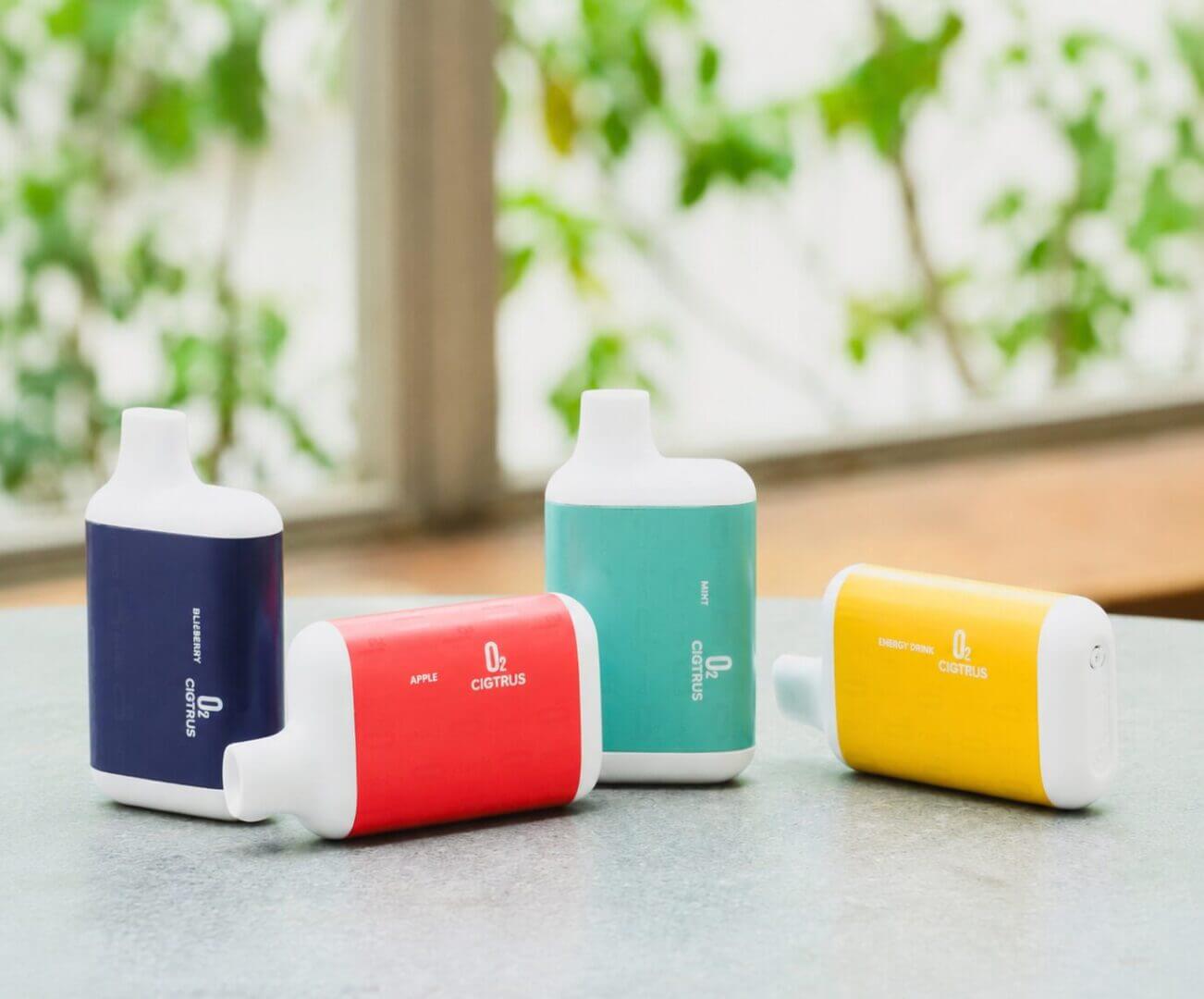
👉 Try the Variety Pack